IT Security Suite
The ECI TruSecc PCC is a specialized communication protocol that is the layer for our network topology was developed over 12 years from the technologies of DecNet, Token, Mesh, FiberNet, ARC, MPM, TurboDOS, AIX, VMS, NetBui, IPX/SPX, RDP, VNC, and VPN.
WHAT WE DO
We provide
creative solutions for all your needs!
ECI Networks is a leading award winning developer of e-business systems and software that enable companies and organizations to effectively collaborate and communicate with their trading partners, market their products and services online, generate new business opportunities and efficiently transact business globally.
GET STARTED TODAY

WHAT WE OFFER
ECI Solutions

IT & Systems Security Suite
Today’s business demands reliable, secure, available and innovative Information Technology services, including software development and maintenance, hardware infrastructure, and innovative personnel with the knowledge and skill to meet the business’ needs today and in the future. ECI Networks is designed to meet those demands.

Managed Networks
ECI offers a managed network care solution demonstrated by our management and maintenance procedures, to reduce the cost of IT-related ownership and performance by 35-50%.

ITaaS & ITaaU
IT as a Service (ITaaS) and IT as a Utility (ITaaU) is the delivery, we call it ECI E3. More than a reactionary service, our IT service management and back office grid is a full-functioning utility model addressing computer software, hardware, personnel and telecommunications infrastructure with 24/7 on-demand access, response, growth and capacity.
App Design & Development
In 1992, ECI was formed as an IT solutions company, providing web-based solutions and the development of applications over the internet and on premise, with full service hardware support which included telecommunications systems and telephony services.
LEARN MORE
OUR SUPPORT
Portfolio
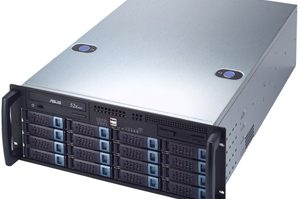
Dedicated Servers
ECI Netorks is the world’s leader in reliable and affordable dedicated server and VPS hosting solutions. As a IBM, HP and Dell partner you can be sure your dedicated server is server-grade. Our wide range of dedicated servers are priced for any budget. For as little as $159 you can have a dedicated server online by this evening. Ask a sales rep about our Dedicated Server Reseller Program.
Managed Hosting Solutions
Every dedicated server can be enhanced with one of our four managed service options. You can’t and don’t want to be online 24/7 managing your dedicated server or website. Let us handle the day to day needs of your dedicated server. Our team is always just a few steps from your dedicated server ready to work for you. Our Dedicated Server Reseller Program rewards up to 100% off on managed services.

Virtual Computing
In 2000, ECI pioneered virtual computing environments, including cloud computing and virtual private networks in one of the nation’s first data centers completely powered by solar, wind, and geothermal energy. ECI set out to bring IT to a level of functionality previously experienced only from utility companies: reliability, security, high availability and performance 24 hours a day, 7 days a week, 365 days a year.
Join us!
Latest News

Active Interpretation of Disparate Alternatives (AIDA)
Dr. Wil Corvey The United States Government has an interest in developing and maintaining a strategic understanding of events, situations, and trends around the world, in a variety of domains.[…]
Read more
Accelerated Molecular Discovery (AMD)
Dr. Bartlett Russell Efficient discovery and production of new molecules is essential to realize capabilities across the DoD, from simulants and medicines essential to counter emerging threats, to coatings, dyes[…]
Read more
10-Year Lunar Architecture Capability Study (LunA-10)
Maj Michael Nayak It is the year 2035, and a thriving lunar economy exists on the Moon. How did we get there? DARPA supports a future model where the National[…]
Read more